Gas Leak Repairs in Everton Hills
If you smell gas indoors, shut the appliance off, open the windows and get everyone outside before anything else. Gas leak repair in Everton Hills is the next part, and our Everton Hills gasfitters run it from the trace to the retest. Repairing and testing a gas system both count as gas work, so a licensed gasfitter handles every part of the job.
If we're late, $100 comes off your bill

- Licensed and InsuredEvery job done by a licensed plumber. QBCC No: 15024607
- Fixed Quote FirstFlat-rate pricing, agreed before any work starts
- Lifetime Labour WarrantyBacked by our Fix-It-or-It's-Free guarantee (T&Cs apply)
- $0 Call-Out FeesNo extra charge for nights, weekends or public holidays
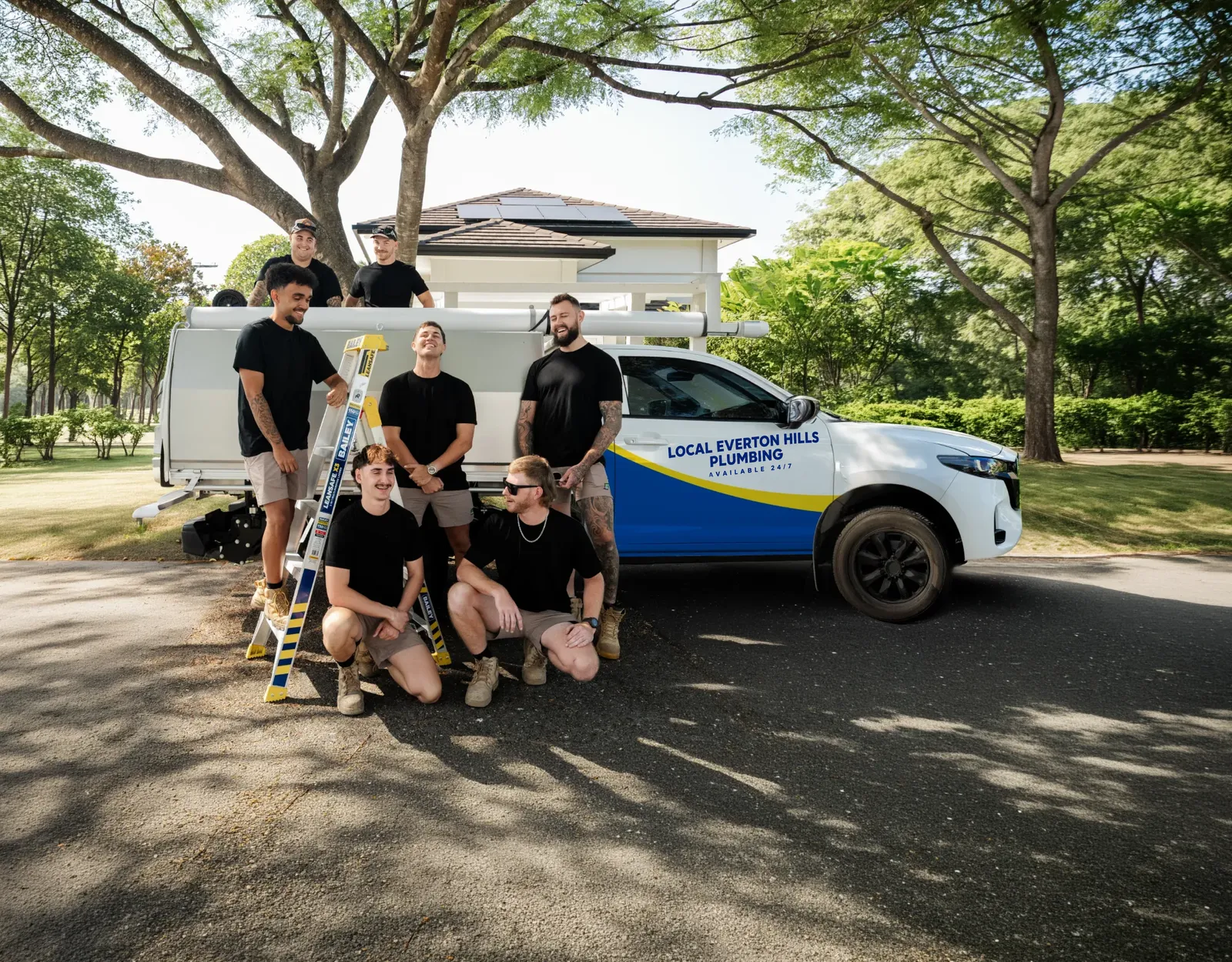
This page walks through the trace, the usual leak points, the repair options and the paperwork that follows. For the wider picture of gas work around the suburb, see our gas fitting page. If the smell is there right now, phone before you read another word.
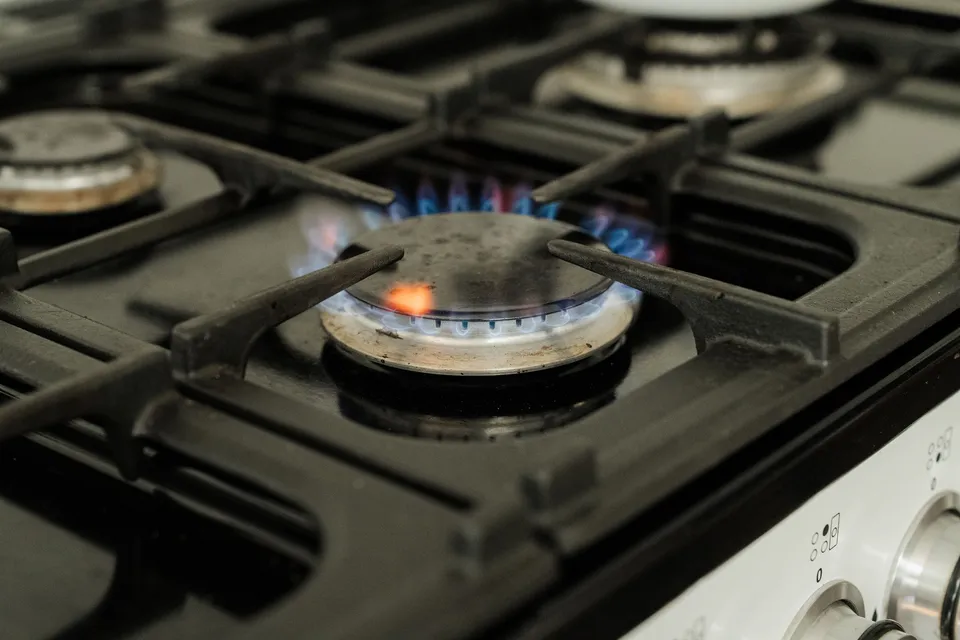
Testing a Gas System for Leaks
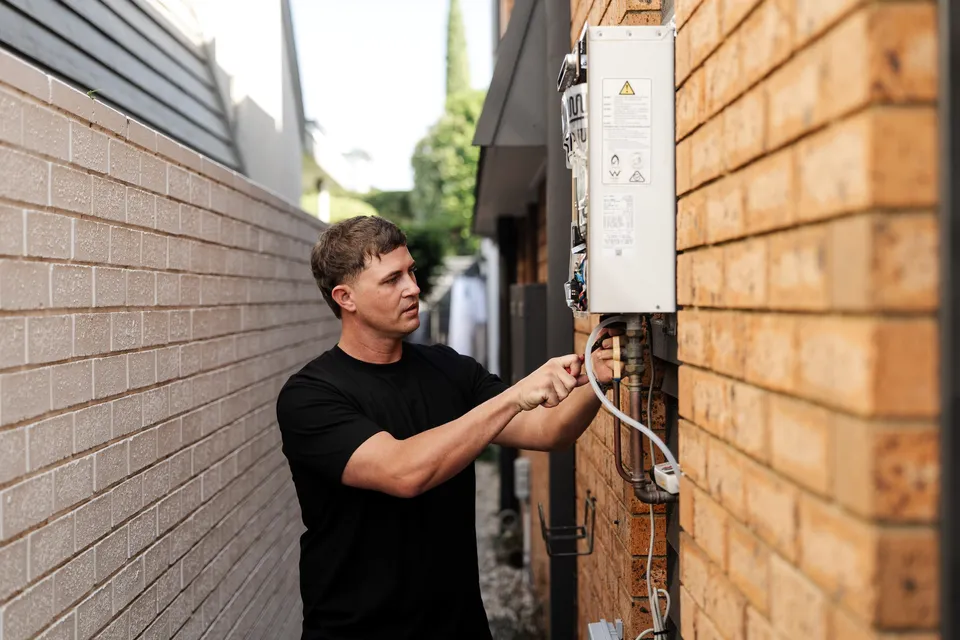
A licensed gasfitter traces a leak in a set order: isolate, pressure-test, then check each fitting for bubbles. The supply gets closed off first, and the pipework splits into isolated stretches. Each stretch gets a pressure test, and the stretch that loses pressure holds the leak.
From there, the search narrows to the fittings. A detergent mix brushed over the connections shows bubbles at the exact joint or thread at fault. Stretches that hold pressure are cleared, which keeps the digging and the pulling-apart to a minimum.
Householders get one check of their own, straight from the Queensland Government. Spray a soapy detergent mix over the fittings with the gas running; if bubbles form, note the spot, shut the supply off, wipe the mix away with clean water and contact a licensed gasfitter. Leave the system unused until the repair is done.
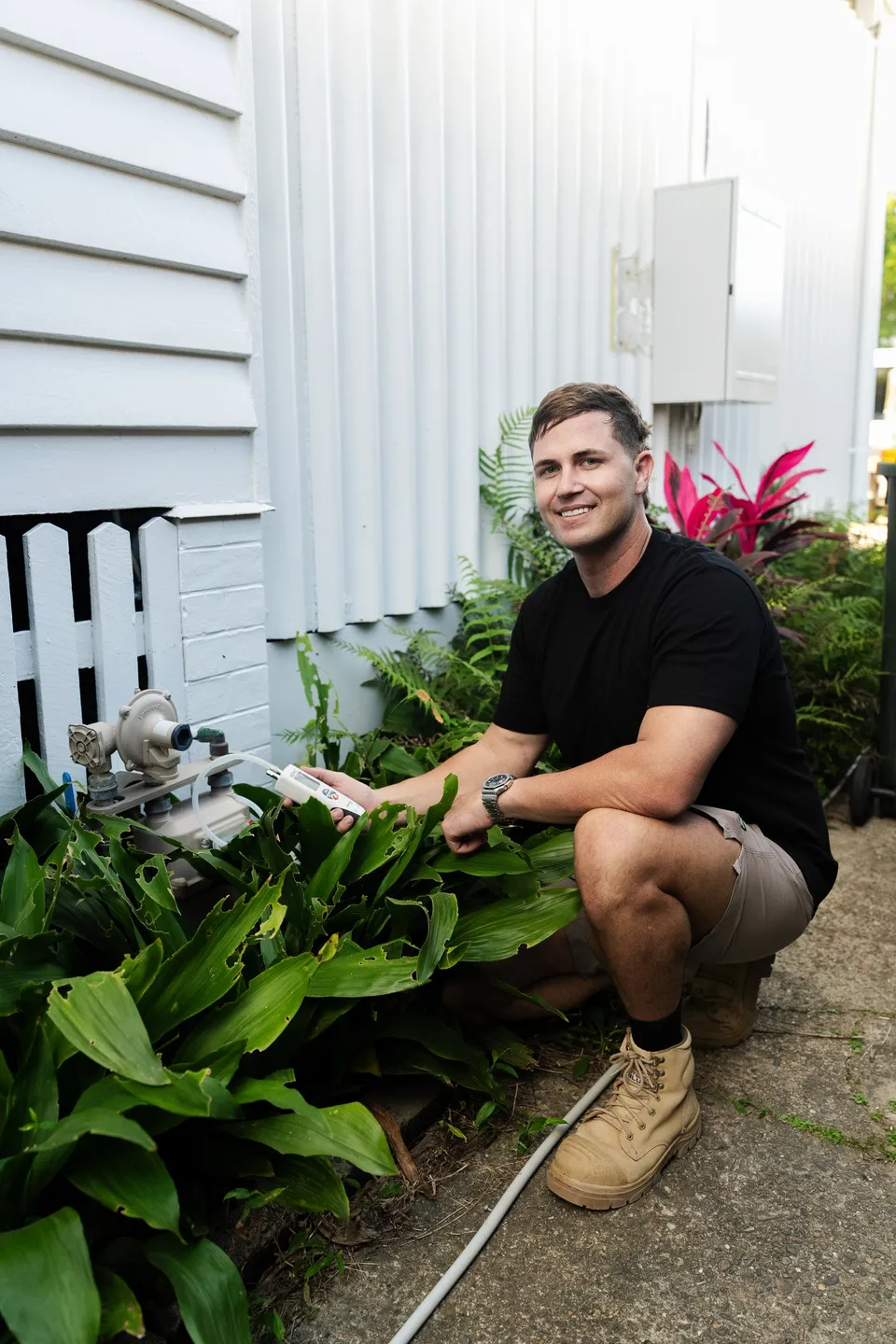
Leak Points Inside, Outside and Underground
From the supply inward, leaks sit most often at the bottle or meter fittings, the regulator and hose, the pipe joints, and the appliance connection. Each of those spots fails in its own way:
Bottle or meter fittings
threads and seals at the supply end, out in the weather and open to knocks.
Regulator and hose
the flexible parts of a system, which age and crack faster than rigid pipe.
Pipe joints
fittings that have worked loose over decades, and corroded joins on runs that pass underground.
Appliance connection
the last link, and the one disturbed whenever an appliance gets shifted or swapped.
Which gas you run changes where a leak collects. Natural gas rises and thins out in the open. LPG sinks instead, so a bottle leak can settle in the low end of a yard or inside a drain.
Fuel gas catches fire readily, and enough of it in an enclosed room displaces the oxygen you breathe, which brings on nausea, dizziness and, at worst, asphyxiation. That is why the safety steps lead every job.
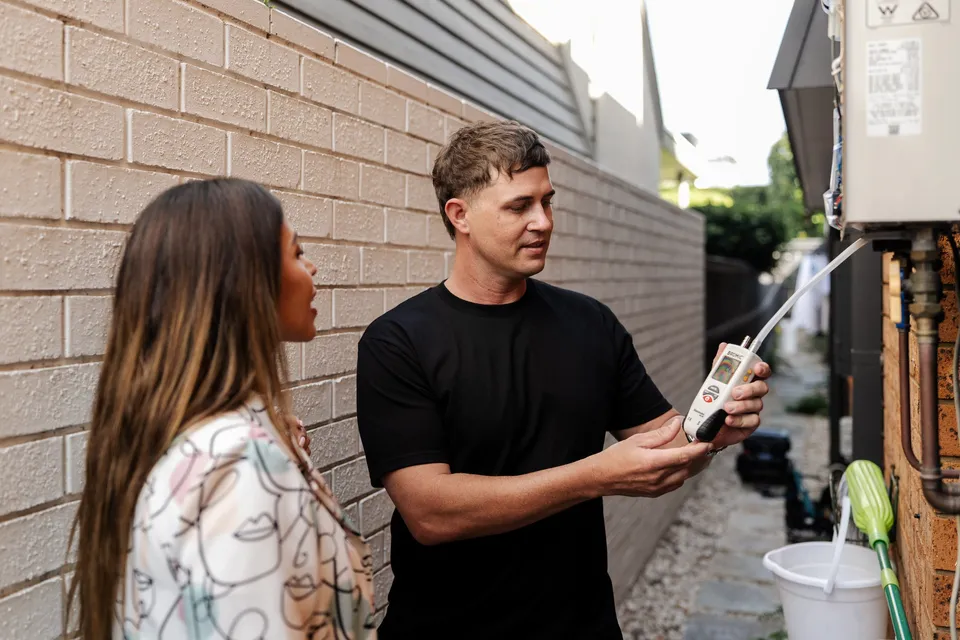
Replace a Fitting, a Section or the Run
A licensed gasfitter matches the fix to the scale of the fault, choosing between a parts swap, a section replacement or a fresh run of pipe. Three options cover most jobs:
Swap the fitting or regulator
the usual outcome where the leak sits at a connection or in the flexible parts.
Replace a section
for a straight stretch of pipe that has corroded underground or inside a wall.
Bypass a run
new pipe routed around a stretch nobody can reach, or that is not worth digging up.
Whichever way the job goes, the whole system gets tested again before the gas is turned back on. A straight parts swap counts as a repair. Work that puts in or changes a system counts as an alteration, and that line decides the paperwork in the next section.
One limit never shifts: repairing or removing a cylinder valve is never a home job. That stays with a licensed gasfitter, on every LPG system.
Paperwork After a Gas Leak Repair
Two documents can follow a gas job: a defect notice for a safety problem left undone, and a compliance certificate once work installs or changes the system. Each has its own trigger:
Defect notice
goes to the owner or operator when a gasfitter finds a safety concern that is not fixed on the spot. Fix the concern during the same visit and no notice is needed.
Compliance certificate
issued straight after a job installs or changes the system, certifying the finished work complies. A parts swap alone may sit on the repair side of that line.
Imminent danger
where serious harm looms, the gasfitter removes the danger first, then phones the network operator and Queensland's Petroleum and Gas Inspectorate.
Gas Repairs Around the Hill Blocks
Everton Hills keeps adding homes, with area-level figures counting 134 dwellings approved in 2021-22, and every new build or extension brings fresh gas pipework and fresh joints to one day check. The rest of the suburb is older stock, brick and brick-veneer houses from the 1960s to 1980s, with fittings that have worked for decades past their install date.
Storm season shapes the calls too. From November to March, thunderstorms push through with hail and destructive wind, and a shifted bottle or a torn regulator hose is a familiar post-storm repair. Damage to a meter or regulator goes to the gas supplier first; the repairs on your side of the meter come to us.
How the Repair Job Runs
- 1

Tell us what's happening
Call (07) 3523 6417 or send the form with a few details about the problem in Everton Hills. A clear description helps us bring the right parts.
- 2

We trace and price the repair
We close the supply, split the pipework into sections and pressure-test each stretch, then work along the fittings with a detergent mix until bubbles mark the leak. You see the options and the price together.
- 3
Approve a fixed price
You get a fixed quote before any work starts, with flat-rate pricing and no hidden fees. Nothing goes ahead until you say yes.
- 4

Pay when it's finished
Pay by card or EFTPOS on site once the job's done, or ask about Fix now, pay later. New connections are their own job, whether that means a gas cooktop installation in the kitchen or a gas bayonet point out on the deck. Both of those jobs start with the same supply test.
Plumbing job in Everton Hills?
$0 call-out fees, available 24/7, and same-day where we can.
Everton Hills Gas Questions
Call (07) 3523 6417Can you stay in the house with a gas leak?
No, you should not stay inside. Leave flames and electrical switches alone, turn the appliance off if you can reach it, and open doors and windows. If the smell stays, shut the supply at the meter or bottle and ring us from outside, or 000.
Who do I call for a gas leak in Everton Hills?
Start with the gas supplier's emergency number, printed on your gas bill under 'emergencies' or 'leaking gas'. A licensed gasfitter handles the repair itself. Ring 000 if the smell persists once the supply is shut off.
Are gas leak repairs free, and what changes the cost?
No, gas leak repairs are not free. Every job is priced with flat rates, and you get a fixed quote before work starts. The figure moves with where the leak sits, how hard it is to reach, the parts needed and the retest.
Can I check for a gas leak with soapy water?
Yes, as a check only. Lightly spray soapy water over the fittings, hoses and connections while the gas is running. Bubbles mean a leak, so turn the supply off and contact a licensed gasfitter for the repair.
What should I do about gas after a storm or flood in Everton Hills?
Call 000 straight away if you can smell gas after a storm or flood. Contact the gas supplier as well if the meter, regulator or cylinder took damage, and keep everything shut down until the system is checked.

Ring Us About the LeakWe'll call you back.
Call (07) 3523 6417 to book a plumber in Everton Hills. We're available 24/7, with $0 call-out fees, flat-rate pricing and same-day where we can.
To claim your $0 call-out fee, call (07) 3523 6417 today.