How to Find a Water Leak
Start at the water meter. That habit anchors every method for how to find a water leak, because the meter registers each litre crossing onto the block, so it tells on a leak day and night. Whatever it reports, a licensed plumber takes from there.
If we're late, $100 comes off your bill

- Licensed and InsuredEvery job done by a licensed plumber. QBCC No: 15024607
- Fixed Quote FirstFlat-rate pricing, agreed before any work starts
- Lifetime Labour WarrantyBacked by our Fix-It-or-It's-Free guarantee (T&Cs apply)
- $0 Call-Out FeesNo extra charge for nights, weekends or public holidays

A bill that runs hot with no change in your habits is the usual clue, and the meter test backs it up.
Everton Hills homes earn this page: mostly detached brick houses from the 1960s to 1980s, built on reactive clay slopes that shift as they wet and dry, and old buried joints feel every move. The services those conditions call for sit on our Everton Hills home page.

Rule a Leak In or Out at the Meter
Turn off every outlet and appliance, note the meter's numbers, leave the block using no water for an hour, then look again; movement means a leak on the property.
The meter test, in order:
- Shut down anything that can draw water: taps, the hose, the washing machine, the dishwasher, a fridge with a water line, and any irrigation.
- Photograph the meter face, small red digits included, and leave its control tap open.
- Stay hands off for an hour or more, with nobody showering or running a tap.
- Compare the photo with the meter. Any movement in the numbers or the dial means a leak is present somewhere on your side, so bring in a licensed plumber to trace it.
Most meters sit in a small box sunk flush with the verge near the street boundary. Lift the lid and the numbers are right there.
Don't wait for a letter. Unitywater runs a program that watches for unusually high use and reaches out to customers where it can. Its concealed leak policy asks customers to check their own meter rather than lean on that heads-up, because losses on the property side sit with the owner.
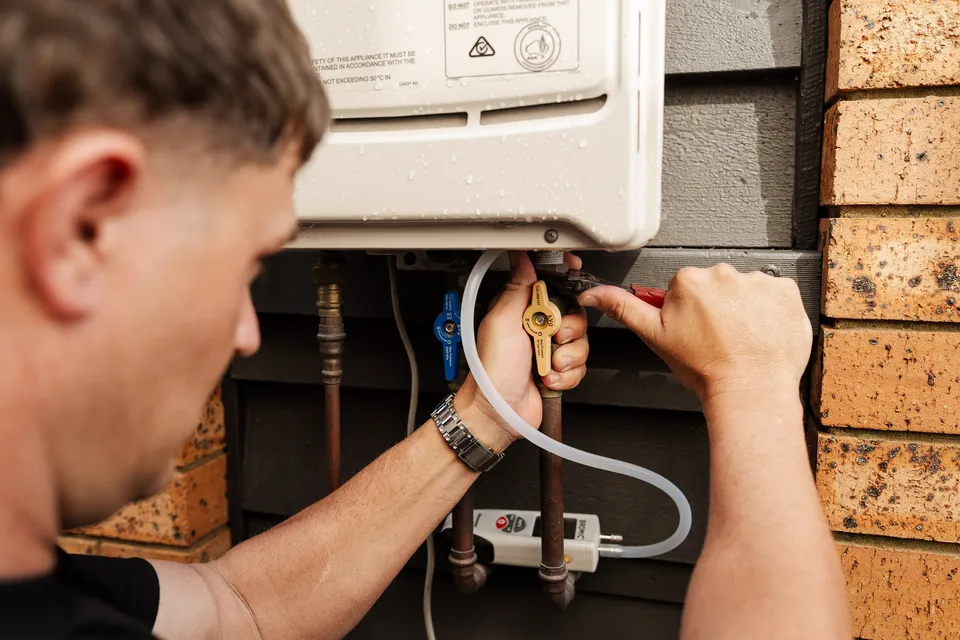
Where Water Hides in the Yard
Outdoors, run through the outdoor taps and their hose fittings for weeps, any rainwater tank for unwanted top-ups, and the lawn and garden for soggy ground or a too-green patch.
The outdoor tap
A slow drip here can pour thousands of litres into the soil over a season, and older hose fittings crack and weep with age.
The rainwater tank
Where a tank connects to the mains, check it isn't topping itself up from town water when nothing draws on it. A worn solenoid or an internal valve can keep adding water, and sorting which is a licensed plumber's job.
The ground
Lawn that stays soft and spongy, paving gone uneven, or one strip greener than everything around it points to water escaping below the surface.
The pool, if you have one
Stand a bucket of pool water on the top step, mark the level on the bucket and on the pool, leave both for 24 hours, then compare. A pool that drops further than the bucket has a leak; matching drops are just evaporation.
Big natives near the creek reserves push roots along old trenches, so a soggy patch on a well-grown block deserves more than a shrug.
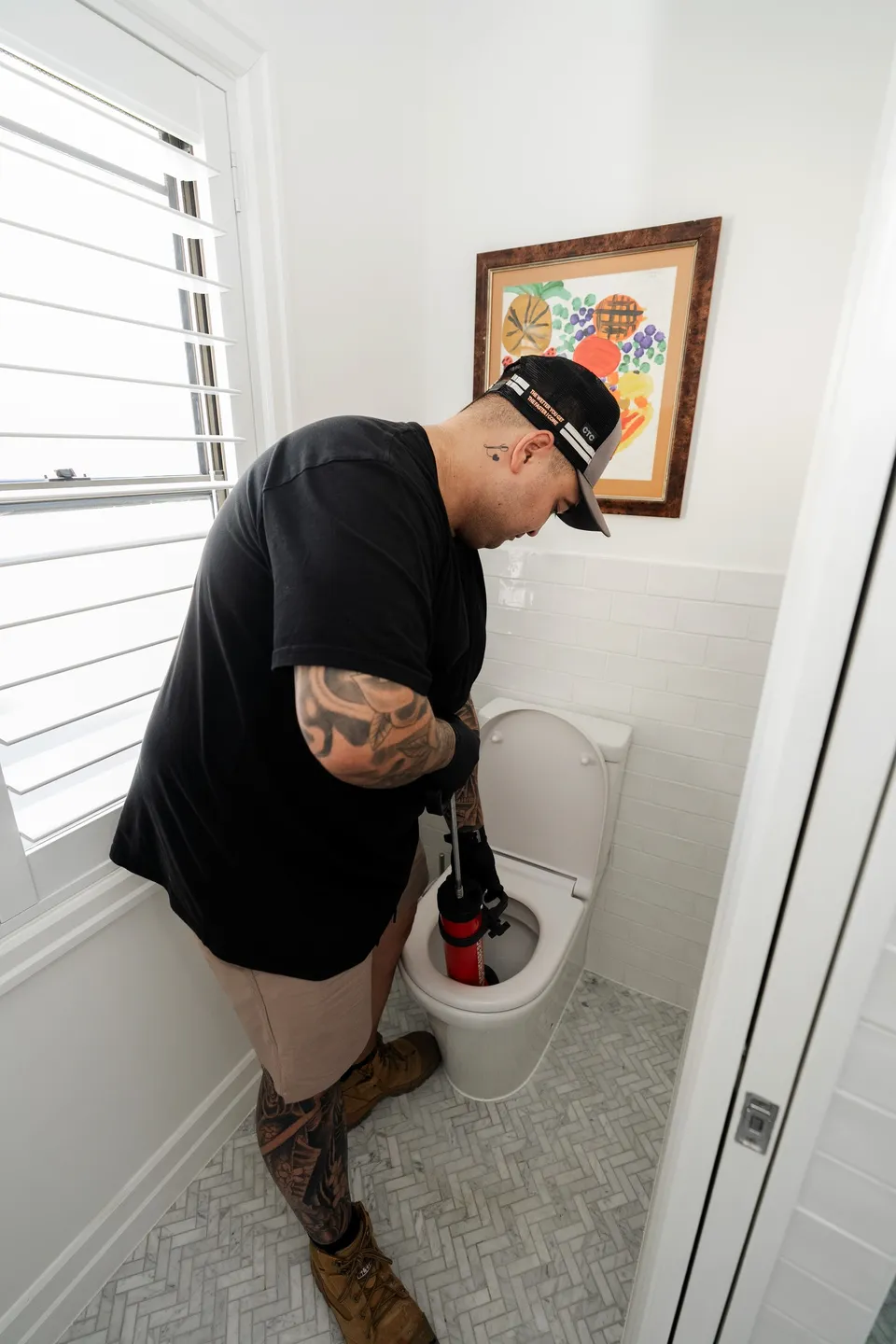
The Toilet Dye Test and Other Quick Checks
Inside, begin with the toilet cisterns, then the mixers and showers, then the appliances with a water line, and finish on the surfaces.
The dye test
Food colouring dropped into the cistern, with no flushing, tells the story: any tint reaching the pan means the cistern leaks past its seal. Flush when you're done, because the colouring won't stain a ceramic bowl.
Mixers and showers
Confirm every tap and shower sits fully off, with no weep at a spout or a shower head connection.
Appliances
Look over the fridge's water line and the hot water unit for drips at fittings or a puddle in the cabinet below.
Surfaces
Damp patches, staining or a musty smell where no water should be, swollen trim, and paint that lifts or peels are the classic signs of a hidden leak.
A warm patch underfoot
Hot water pipes under a slab warm the floor above them when they leak, so a spot that stays warm with no heating nearby is one of the slab leak signs. Ring about that one without delay.
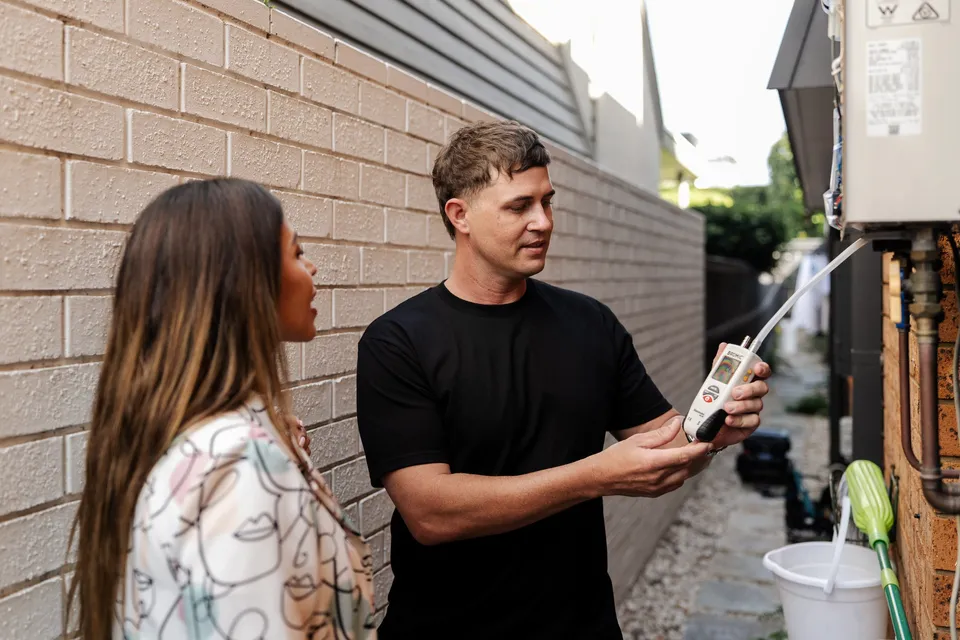
What the Search Tells You
A drip caught at a tap, toilet or fitting usually is the whole story; a meter that still moves after an empty hunt means the leak hides.
Where it hides
Think under a lawn, a paved drive or inside a wall cavity. A leak like that can run for weeks until the bill or the water damage gives it away.
Who fixes it
Every pipe from the meter onto the property belongs to the owner, concealed leaks included. Mending a damaged pipe is classed as minor work, so a licensed plumber does the repair.
When to Ring a Plumber
Ring (07) 3523 6417 when the meter keeps moving after your hunt, or when any of these appear:
- a warm or damp patch on the floor with no plumbing visible above;
- ground that stays soft and wet long after the rain has gone;
- paint, plaster or trim swelling with no tap above it;
- a tank quietly refilling from the mains while everyone sleeps.
Reactive clay shifting beneath an Everton Hills block slowly works at old buried joints, so a leak can begin with no drama at the fixtures. Our regular run takes in the acreage blocks on the western side and the streets around the Prince of Peace college on Henderson Road. When the search goes quiet, our leak detection page explains how we close in on it.
Hidden Leak Questions
Call (07) 3523 6417What if my water meter moves but I can't find a leak?
Then the leak is concealed, sitting under a lawn, under a driveway or behind a wall lining. A licensed plumber isolates the supply section by section, pressure-tests each run and listens along the pipes. Our leak detection page explains that search end to end.
Who is responsible for a hidden leak in Everton Hills?
The property owner. Unitywater keeps the pipes on the street side, and everything past the meter is the owner's to maintain, concealed leaks included.
How do plumbers find a leak I can't see?
We confirm the leak at the meter, then divide the supply into sections. Each section gets a pressure test, we listen for flow along the pipe runs, and moisture readings narrow the spot before anything gets opened.
Will Unitywater reduce my bill if a hidden leak caused it?
Yes, it may, under the utility's concealed leak rules. The leak must be hidden from view, repaired within the time limit the policy sets, and backed by a licensed plumber's invoice. Taps and running toilets are excluded, and our leak detection page sets out the rules.

Book Your Leak CheckWe'll call you back.
Call (07) 3523 6417 to book a plumber in Everton Hills. We're available 24/7, with $0 call-out fees, flat-rate pricing and same-day where we can.
To claim your $0 call-out fee, call (07) 3523 6417 today.